sonic art inspiration
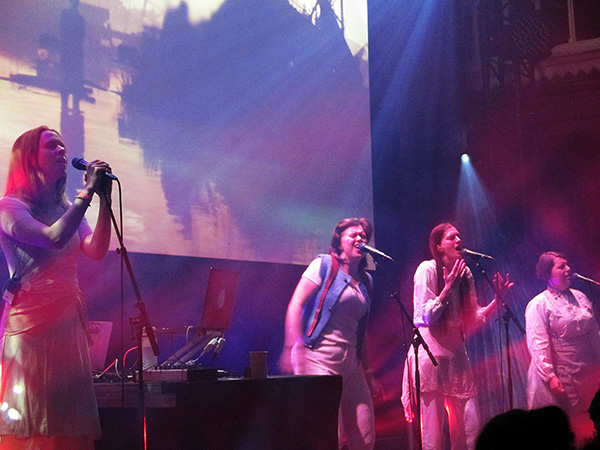
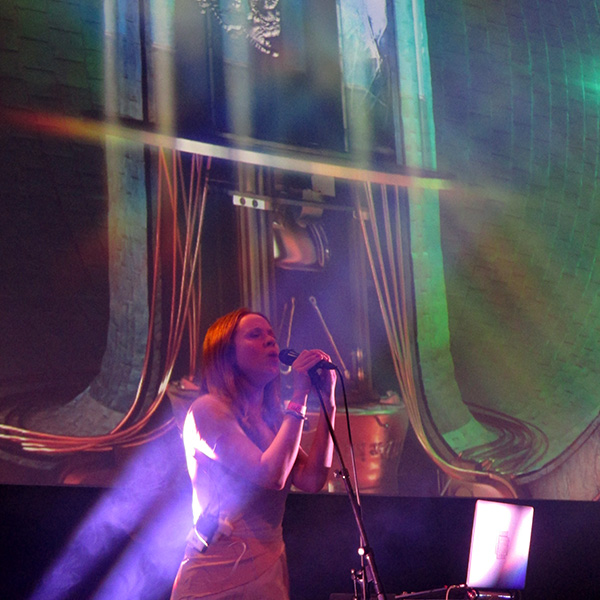
Image: Still from video by Terike Haapoja
Capitalism Free Art
De beurs is per se kunstvijandig. We hebben nieuwe economische modellen nodig voor kunstenaars.
Ik was gisteren op Art Rotterdam en daar was weer niets aan. Kunst in Nederland wordt steeds armzaliger lijkt het. Zo’n beurs is natuurlijk niet representatief, het hangt er enkel voor de handel, niet voor de kunst en kunstliefhebbers.
Een door de ratio gestuurd leven, leven met verstand. Je niet mee laten slepen door gevoelens. Ja, gevoelens zijn er en hebben soms ook een stimulerende energie. Maar over het algemeen is leven geleid door gevoel slavernij. En het is vaak destructief. Zeker nu het gevoel tot meer consumptie leidt. Het gevoel vooral op het ik gericht is. Gevoel een vorm van verdwazing (geworden) is.
Leven naar de geest, in de zin van Spinoza, streven naar groter inzicht. Onderkennen dat we (er is geen ik) onderdeel zijn van Natuur (of god) en van daaruit liefde en respect hebben voor Natuur en Leven. Waarbij Leven veel meer is dan die paar jaar dat we ademen.
Ontwikkelen en liefhebben, dat is leven naar de geest.
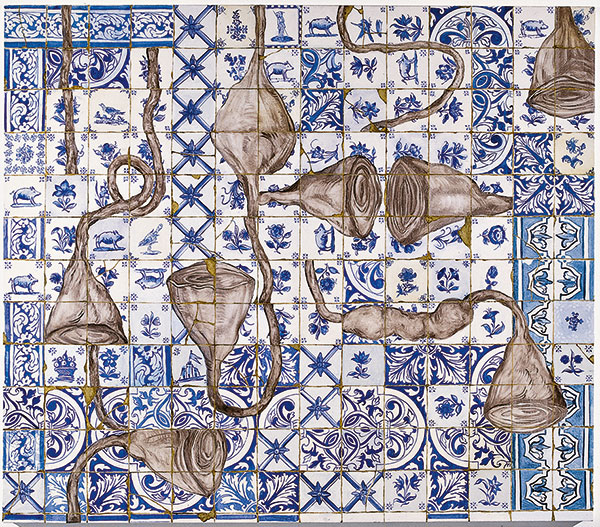
Adriana Varejão, Azulejaria de Cozinha com Presuntos [Keuken tegels met hammen], 1995, olieverf op doek, 140 x 160 cm. Foto: Vicente de Mello.
Een geweldige tentoonstelling in Witte de With Rotterdam, het soort groepstentoonstelling dat ik zo sterk mis in Nederland. Een duidelijk thema met historische connectie en gevarieerd werk van hoog niveau.
Wat wij in NL kennen als Delfts Blauw is een soort keramiek dat oorspronkelijk uit China komt, daar deels geproduceerd met grondstoffen uit het Midden Oosten.
In de tentoonstelling werk van kunstenaars uit verschillende delen van de wereld die toont hoe een bepaald soort keramiek in verschillende culturen en perioden tot unieke vormen komt die ook tot iets universeels behoren.
Daarmee is dit een tentoonstelling die informatie verbeeld over de wereld zonder dat het afgedwongen educatief is. In deze tijd waarin dodelijk saai de norm is voelt deze frisse bries weldadig. Gaat dat zien.
Van de website:
“Deze tentoonstelling onderzoekt hoe vorm landsgrenzen doorkruist. Neem blauw-wit aardewerk, zoals Delfts Blauw in Nederland, Qinghua-porselein in China, Iznik-keramiek in Turkije, Azulejo in Portugal, Engels porselein (‘China’) of Talavera Poblana in Mexico. Een kosmopolitisch artefact met zijn wortels in de wereldhandel, maar overal aangepast aan lokale tradities. Het is die wereldhandel, onlosmakelijk verbonden met het kolonialisme, die samenlevingen ingrijpend veranderde. Door een kunstuiting van een wereld in beweging als vertrekpunt te nemen, nodigt deze tentoonstelling uit om historisch blauw-wit aardewerk te zien als mobiele drager van ideeën en tradities, maar ook als vertrekpunt en bestemming hiervan. Er is werk in diverse media te zien van hedendaagse kunstenaars uit Noord-, Midden- en Zuid-Amerika, Azië en Europa.”
Op een back-up schijf kwam ik deze foto tegen die ik lang geleden maakte in Lille met filmcamera die zeer primitieve foto’s maakte. Those were the days. Ik was op weg naar vrienden in Ray sur Authie en gebruikte de tussenstop om de nieuwe architectuur in Lille te bewonderen.